
Where to Buy · 14 min read
Pallet Shoes: Buying Footwear Pallets for Resale
Pallet shoes buying for resellers — grades, size-run reality, boxed vs loose, Nike and mixed footwear lots, and how PalletsSource lists shoe pallets without hype.
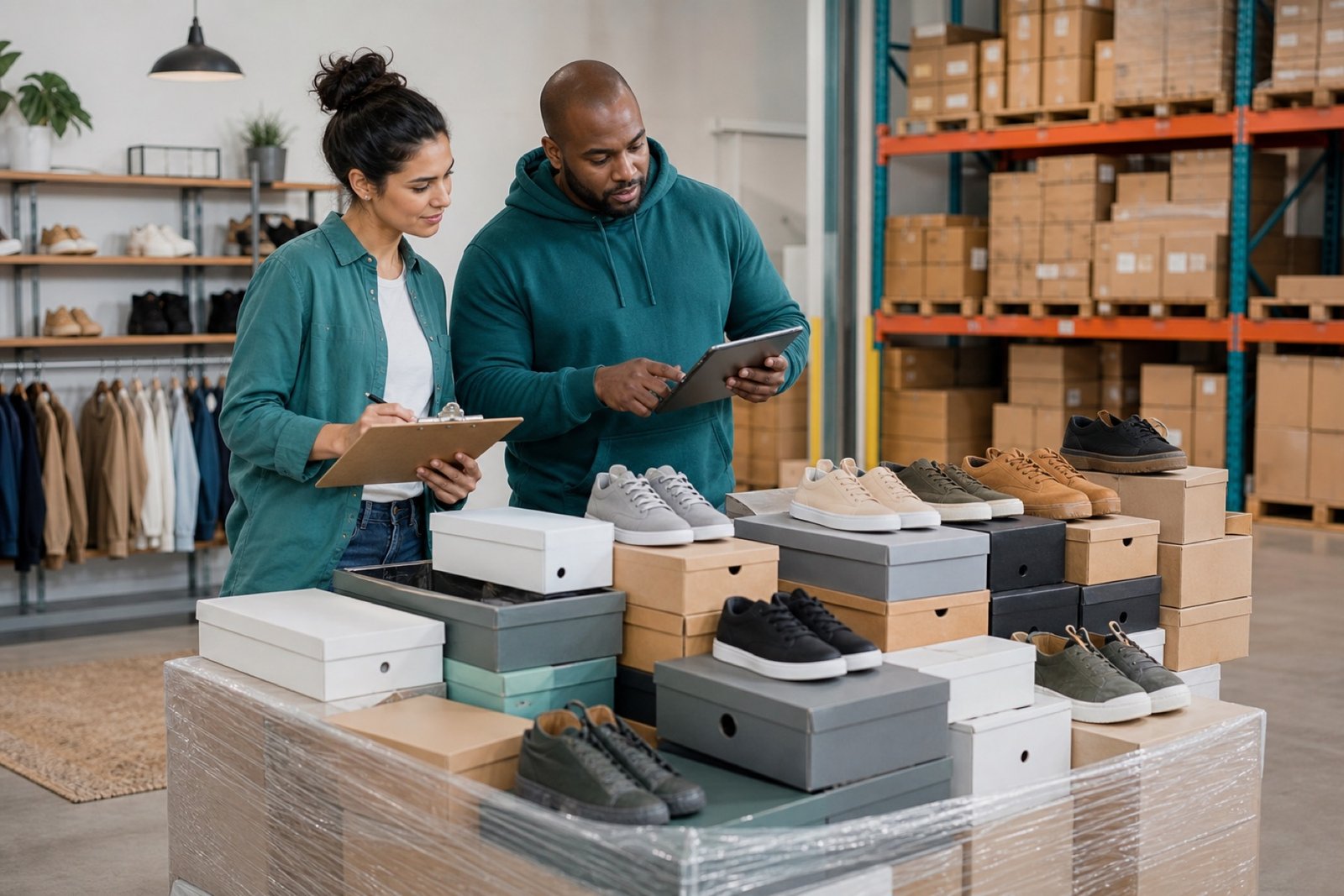
Pallet shoes are how footwear resellers scale beyond thrift pulls and single-pair auctions. You buy a merchandise pallet — mixed brands, athletic runs, boots, or a brand-focused lot when the supplier evidence supports it — then you sort, photograph, and sell. In our online catalog the shoe aisle is busy for a reason: pairs move when sized and listed honestly. This guide is Customer Care voice for shoe ops: what to ask before you reserve, how grades show up in footwear, and how to avoid confusing empty wood with shoe-loaded pallets. Brand names like Nike appearing on lots reflect assortment notes when supplied; they are trademarks of their owners. We do not invent authenticity certificates to close a sale.
👟 What a shoe pallet actually contains
Expect cartons, loose pairs, or a mix depending on the lot. Customer Returns shoe pallets routinely include try-ons, wrong-size comebacks, and pairs with box wear. New-grade lots can still show warehouse scuff on cartons. Mixed grade means you will sort harder. Manifests, when present, may list styles and quantities — still not a retail packing slip for every unit's resale condition. Photos are representative of footwear on pallets unless a listing says otherwise. Plan table space: shoes need rows by size and gender more than GM lots do.
📏 Size runs and ops design
The silent killer of shoe pallet margin is an unusable size curve. If your channel is women's boutique and the pallet skews men's work boots, you will sit on inventory. Ask for size notes when we have them. If we do not, price the uncertainty. Build a receiving sheet: men's / women's / kids, athletic / casual / boots, boxed / loose. Train staff to lace, stuff, and photo with consistent angles. That ops design matters more than chasing a viral silhouette you might not even receive.
🏷️ Brand-focused lots without theater
Nike shoe pallets and similar brand-forward listings appear when assortment notes support that story. Authenticity claims display only when verified and supplied. Amazon-keyword shoe returns sometimes enter the same aisle — Amazon remains a third-party trademark; we are unaffiliated; sourcing is evidence-based only. Do not market pairs as verified authentic if the pallet paperwork never said so. Honest listing language keeps marketplaces happier and keeps our Customer Care team willing to sell you the next lot.
| Station | Task | Why |
|---|---|---|
| Unload | Stage by carton vs loose | Speeds size sorting |
| Sort | Gender / size / type | Matches channel demand |
| Clean | Wipe, stuff, lace | Photo quality and sell-through |
| Photo | Consistent angles | Fewer returns on your storefront |
| List | Condition accurate to grade | Account safety |
| Quarantine | Oddities / hazards | Protects brand and buyers |
💵 Pricing pallet shoes without fantasy ROI
Start from pallet price plus freight plus labor hours. Subtract expected unsaleables on Returns grades. Use ERV only as a soft ceiling. Compare two shoe lots side by side before buying the cheaper one — weaker photos often mean weaker predictability. Local booths can move mixed athletic quickly with try-on space; online needs tighter photos and size accuracy. No profit guarantees from us — footwear is competitive and condition sensitive.
- Open the shoes category and compare grades.
- Check for brand notes and size information when supplied.
- Calculate landed cost with sort labor.
- Reserve a lot you can stage this week — do not stack three unopened shoe pallets if you lack rails.
- Receive with a size sheet ready.
- List with condition language that matches the pallet grade.
Then open Nike shoe pallets or mixed footwear lots when they match how you sell.
Shop shoe pallets🚚 Freight tips for footwear
Shoe pallets can be dense and carton-heavy. Confirm residential liftgate needs. On pickup days bring a vehicle that can take the footprint and height — do not assume a crossover SUV. Stretch wrap and corner boards matter in transit; note damage at receipt. If you buy bulk shoe programs, stagger arrivals so sorting does not collapse into a garage avalanche.
🧵 Empty wood vs shoe merchandise
If a seller advertises pallet shoes but shows only empty wood, walk away. Footwear liquidation must show pairs or shoe cartons. Our shoe galleries exist for that reason. Keep empty wood vendors on a separate list for outbound shipping needs after you sell through — that is a different purchase.
A mature shoe op also plans for leftovers: odd sizes, single pairs, and heavily worn returns. Decide in advance whether odds go to discount bins, material recycling partners, or donation when allowed. That plan belongs in your used pallet and returns playbook, not as an afterthought when the hallway is full. Resellers who pre-plan leftovers keep cash flow calmer and stay ready to receive the next shoe pallet.
Finally, align staff incentives with accurate grading. If your sellers earn commission on sell price alone, they may overshoot condition claims. Tie quality metrics to return rates and account health. The pallet shoes business rewards teams that tell the truth in the title and the fifth photo. That is the same honesty we use on our online listing — checkout to storefront. Build a receiving cadence so every pallet gets the same stations: unload, pair, size, assess, clean, photograph, list. When the cadence slips, odd sizes pile up in hallway corners and cash freezes in unsorted cardboard. Write the cadence on a whiteboard if you have to. Resellers who protect that rhythm can take a second footwear pallet without drowning the first.
A practical note on empty wood versus shoe merchandise, because the search “pallet shoes” still pulls both audiences. Furniture makers want boards; resellers want pairs. We sell the pairs. If a listing anywhere shows only bare decking while advertising footwear lots, that is the wrong market for a shoe operation. Demand product-on-wood photography, a condition grade, and a size or category note when the supplier provided one. Ask Customer Care about upcoming footwear intake if you need a specific aisle — sneakers, boots, mixed athletic — and we will tell you what is actually on the online catalog rather than inventing a brand story to fill the calendar.
Customer Care summary
Pallet shoes work when size ops, condition honesty, and landed cost discipline show up together. Browse the shoe aisle, read the grade, and stage your tables before the truck. Plan the leftover singles and odd sizes on day one, photograph wear plainly, and keep brand claims tied to supplier evidence. That is how a footwear resale operation stays solvent past the first unboxing weekend.
❓ FAQ
What are pallet shoes?+
Footwear sold by the wholesale pallet — mixed or brand-focused lots — for resale operations, not single-pair retail shelves. The pallet is packaging; the pairs are the product.
Are Nike shoe pallets always authentic?+
Authenticity claims appear only when verified and supplied for the lot. Brand names are trademarks of their owners. We do not invent certificates to close a sale.
Do photos show my exact pairs?+
Photos are representative of footwear on pallets unless a listing says they are of that exact lot. Read the caption and the grade before you plan sizes.
Should beginners buy Returns shoe pallets?+
You can, if you budget sort time and wider margins. Start with one pallet, time the full sort, and only then scale.
Empty pallets or shoes?+
We sell shoe merchandise on pallets — not empty wood. Empty decking is a different market served by recyclers.
Can I pick up shoe pallets?+
Request pickup when ordering; we confirm dock timing after reserve. Freight quotes use your ZIP and whether you need a liftgate.
Any Amazon affiliation on Amazon-return shoe lots?+
No. Independent retailer; sourcing notes only with evidence. Amazon trademarks belong to their owners.
Or browse all footwear categories if you need mixed athletic and boots instead.
See Nike shoe pallet listingsReady to buy · transactional
Shop this guide — order pallets now
On-site listings and checkout paths referenced in this article.
Same topic · informational partner guide
Inspect pallet shoes for sale on the floor at PalletsStockroom
Same topic — floor-inspection walkthrough. Wholesale pallets from the stockroom floor — inspect, quote, buy.
Inspect pallet shoes for sale on the floor at PalletsStockroomSame topic · informational partner guide
Shop pallet shoes for sale with confidence at PalletsBay
Same topic — trust-first buying guide. Clear lots. Clear price. Confidence to buy.
Shop pallet shoes for sale with confidence at PalletsBayBuy on PalletsStockroom + PalletsBay · commercial + transactional
Order wholesale pallets on partner storefronts
Checkout, bulk quotes, and the same-topic guide on each partner domain.
More from the blog
Buy Amazon Pallets Online Today: Shop, Checkout, or Quote
Buy Amazon pallets online with listed prices — shop return lots, compare grades, checkout or get a Care-backed quote.
10 min read
Amazon Bulk Buy Online: Quote 1–5 Pallets with Customer Care
Amazon bulk buy online — multi-pallet quotes, freight to your ZIP, no auction premiums. Care-backed wholesale volume.
11 min read