
Buying Guides · 12 min read
Stock Pallet Buying Guide: Wood Pallets vs Merchandise Lots
Understand whether a stock pallet means empty shipping wood or a pallet of resale merchandise, then compare condition, evidence, delivery, and checkout options.
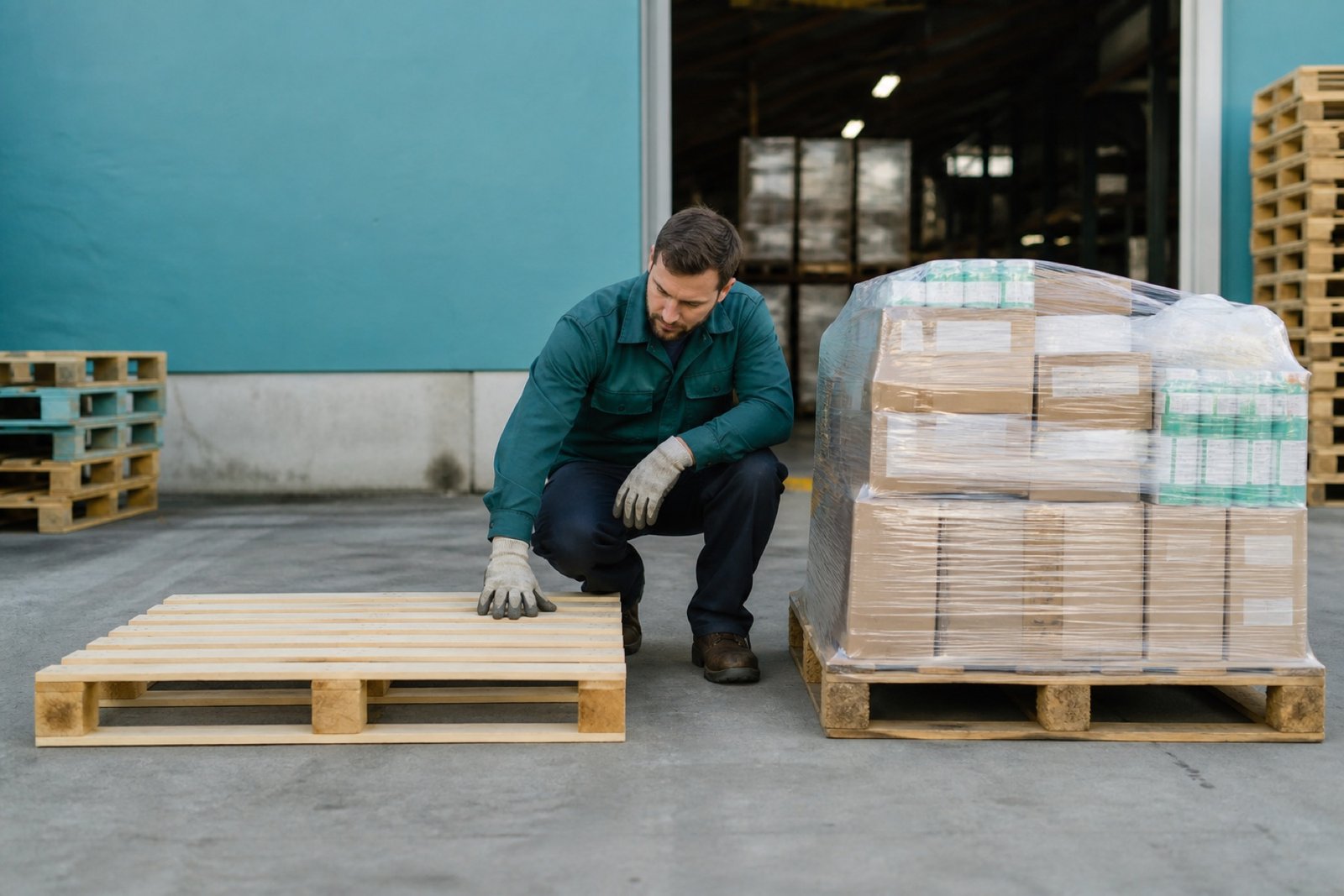
A search for a stock pallet can lead to two completely different products. One is an empty wooden platform used to store or ship cartons. The other is a merchandise-loaded wholesale lot containing products intended for resale. PalletsSource is an online storefront for the second kind: merchandise grouped and sold by the pallet. We do not present empty wood as inventory. That distinction matters before you compare prices, because a low price for used timber has no relationship to the value, condition, or delivery cost of a loaded liquidation pallet. This guide explains how to identify the product you need, read an online listing, and move from browsing to cart or quote without relying on promises about contents or resale results.
🪵 First decide what “stock pallet” means
Empty wood pallets are logistics equipment. Buyers compare dimensions, deck-board style, load rating, treatment markings, and whether the pallet is new, repaired, or used. Merchandise pallets are wholesale inventory. Buyers compare product category, condition grade, photos, source notes, manifest availability, estimated retail information, and freight. A listing for a merchandise pallet should show or describe goods, not merely a stack of bare wooden platforms. If your goal is warehouse racking, export packing, or replacing damaged skids, contact a packaging or wood-pallet supplier. If your goal is to stock an online shop, market booth, discount store, or resale operation, browse a merchandise category and assess the lot as inventory. PalletsSource listings and Customer Care conversations use “pallet” in this merchandise sense unless a page explicitly says otherwise.
📦 What a merchandise stock pallet listing should show
A useful listing gives you enough information to decide whether the lot fits your business model. Start with the category and condition. Shoes, electronics, tools, toys, clothing, beauty products, home goods, and general merchandise require different testing, storage, and selling skills. Then read every photo note. Some images may show the exact lot, while others may be representative of a recurring category and grade; the listing should tell you which applies. Review the pallet price, any estimated retail figure, and any available source or manifest notes. Estimated retail is a reference derived from available product information, not a guaranteed sales total. A manifest is included only when the supplier provides one. An empty manifest field should never be filled with invented quantities, models, or brands.
🔎 A clear comparison before you buy
| Buying question | Empty wood pallet | Merchandise stock pallet |
|---|---|---|
| Primary purpose | Move or store cartons | Acquire products for resale or business use |
| Main details | Size, treatment, load rating, wood condition | Category, grade, photos, source notes, price |
| Value basis | Platform material and specification | Merchandise mix and disclosed condition |
| Typical seller | Packaging or pallet recycler | Wholesale or liquidation storefront |
| Delivery planning | Stack count and truck space | Pallet count, weight, destination, accessorial needs |
| Buyer review | Inspect boards, blocks, nails, and markings | Inspect listing evidence and receiving process |
Condition language is central to a merchandise purchase. New, Open Box, Used, Customer Returns, and Mixed describe the lot as a whole; they do not promise that every unit is identical. Customer Returns can include unopened, opened, incomplete, cosmetically marked, or used items. Mixed can contain more than one condition on the same pallet. Even a New wholesale lot may have carton wear from storage and handling. Match the grade to the amount of inspection and preparation your sales channel can support. A boutique may prefer a narrower category and cleaner grade, while a discount seller may be comfortable sorting a varied lot. The best choice is not automatically the pallet with the largest estimated retail figure; it is the pallet whose disclosed characteristics align with your space, skills, and customers.
🛒 From category page to cart or quote
- Choose a category you already understand or can test confidently.
- Open the listing and review the grade, image notes, price, and available evidence.
- Estimate freight, receiving space, sorting time, and resale fees before deciding.
- Add an available listed lot to the cart when the quantity and terms fit.
- Use the bulk quote journey for multi-pallet requirements or recurring supply needs.
- Contact Customer Care with the listing name and destination postal code when details need confirmation.
The cart journey is designed for listed inventory that is available in the quantity shown. Before checkout, confirm your contact information and review payment and shipping guidance. Freight is destination-specific and may change based on commercial or residential access, liftgate requirements, appointment delivery, and pallet count. Pickup, where offered, also requires confirmation rather than an unannounced arrival. Larger orders belong in the quote journey because lane, equipment, and consolidation details must be reviewed together. Customer Care can clarify what the listing states and explain the next step, but it cannot convert representative photography into an exact-item guarantee or predict your resale outcome. Build your decision from the written grade and evidence, then keep a copy of the order details for receiving.
Compare category, grade, photos, and listed price before adding a lot to your cart.
Browse merchandise pallets in stock🚚 Plan the landed cost, not only the pallet price
A stock pallet becomes useful inventory only after it reaches your receiving location and is processed. Add the quoted freight or pickup expense, payment costs, unloading needs, supplies, testing time, cleaning, photography, marketplace fees, and a sensible allowance for unsellable or slow-moving units. Do not calculate from the optimistic assumption that every item sells immediately at a full retail reference price. Liquidation condition and local demand vary, and no storefront can promise a fixed margin. For electronics, budget for functional testing and data-safe handling. For apparel, budget for sizing and presentation. For tools, identify your battery and accessory checks. For mixed merchandise, reserve more sorting space. These operational choices are yours, but making them before checkout creates a more reliable buying decision.
✅ Receiving keeps the listing and delivery connected
Prepare the receiving area before the appointment. Photograph the wrapped pallet and freight labels before opening it, note visible transit damage on the carrier paperwork, and retain packaging while you compare the delivery with the order. Sort by condition and testing requirement rather than assigning a resale price immediately. If a material issue appears, contact Customer Care promptly with the order reference, photos, and a concise description. Liquidation lots naturally vary within their disclosed grade, so the relevant comparison is the published listing, not an expectation that every carton resembles a retail shelf. A documented receiving routine protects both the buyer and seller and makes future category selection easier.
Final stock pallet checklist
- Confirm that you want merchandise, not empty shipping wood.
- Select a category your business can inspect, store, and sell.
- Treat condition as a lot-level disclosure, not a per-unit warranty.
- Use manifests and source claims only when supplier evidence is present.
- Calculate freight and processing before relying on a retail reference.
- Choose cart for listed lots and a quote for larger requirements.
- Keep order, delivery, and receiving records together.
❓ FAQ
Does PalletsSource sell empty wooden stock pallets?+
No. PalletsSource presents merchandise-loaded wholesale and liquidation lots. Buyers seeking bare wood platforms should use a packaging, recycler, or wood-pallet supplier.
Is every item on a stock pallet in the same condition?+
Not necessarily. The listing grade describes the lot overall. Customer Returns and Mixed lots can include several item-level conditions.
Will every stock pallet include a manifest?+
No. A manifest is shown only when the supplier provided one. PalletsSource does not invent piece counts, models, or brand details to fill missing evidence.
Can Customer Care guarantee my resale profit?+
No. Results depend on condition, freight, testing, demand, selling fees, pricing, and the buyer’s own process. Retail references are not profit promises.
Should I use the cart or request a quote?+
Use the cart for an available listed lot when the shown quantity fits. Request a bulk quote for larger quantities, recurring needs, or more complex freight planning.
What should I do when the pallet arrives?+
Photograph it before opening, note visible carrier damage, retain records, sort against the disclosed grade, and contact Customer Care promptly if a material listing issue appears.
Share your preferred category, quantity, and destination so Customer Care can review the next step.
Request a multi-pallet quoteReady to buy · transactional
Shop this guide — order pallets now
On-site listings and checkout paths referenced in this article.
Same topic · informational partner guide
Inspect stock pallet for sale on the floor at PalletsStockroom
Same topic — floor-inspection walkthrough. Wholesale pallets from the stockroom floor — inspect, quote, buy.
Inspect stock pallet for sale on the floor at PalletsStockroomSame topic · informational partner guide
Shop stock pallet for sale with confidence at PalletsBay
Same topic — trust-first buying guide. Clear lots. Clear price. Confidence to buy.
Shop stock pallet for sale with confidence at PalletsBayBuy on PalletsStockroom + PalletsBay · commercial + transactional
Order wholesale pallets on partner storefronts
Checkout, bulk quotes, and the same-topic guide on each partner domain.
More from the blog
Amazon Returns Buying Guide Online: Care-Backed Reseller Playbook
Amazon returns buying guide for online buyers — grades, sorting labor, freight, and when to buy or ask Customer Care.
12 min read
How to Buy Pallets from Amazon Online: Clear Grades, Checkout CTAs
How to buy pallets from Amazon online — read the grade, review photos, checkout or ask Customer Care. Independent of Amazon.
12 min read